
It often happens during a trip, especially with changes in climate or diet, that you end up spending a few tough days running to the bathroom before things go back to normal. In most cases, it is nothing serious: this issue is known as traveler’s diarrhea¹.
Understanding Traveler's Diarrhea
What is Traveler's diarrhea?
Traveler’s diarrhea is caused by certain pathogens. Most often, it’s usually a bacterial infection, but can be viral or parasitic, linked to food and water—often due to poor hygiene practices in some tropical countries¹ ² ³. Even though it is very unpleasant, it is generally a mild illness.
It’s the most predictable travel-related condition, affecting 40 to 60%¹ of all travelers (about 10 million people each year), who experience stomach issues during their trip ranging from mild discomfort to acute episodes.
The change in environment increases the likelihood of contracting this infection. While traveler’s diarrhea symptoms are not age-specific, it tends to be more common in young adults. Its prevalence depends on several factors: the destination (tropical countries are more at risk, though it can happen anywhere), the season, and age⁴.

Symptoms of Traveler's diarrhea
Symptoms vary. Affected individuals typically experience up to five loose or watery bowel movements per day, often accompanied by abdominal cramps, nausea, or vomiting⁵ ⁶.
These symptoms usually appear within the first week of travel and last about four to five days⁵ ⁶.
If symptoms persist or worsen — with the appearance of fever, blood in the stool, or bloating — you should consult a doctor⁷ ⁸.
How to Prevent Traveler's Diarrhea: Prevention Tips
Adopt simple habits to prevent traveler’s diarrhea. You should:
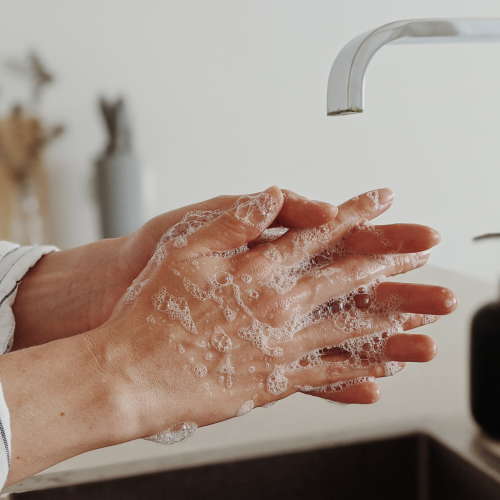
Keep Your Hands Clean
Always wash your hands thoroughly with soap and water or use a hand sanitizer after using the toilet and before eating⁹. This removes viruses, toxins, and microbes and helps limit their spread.
Eat and Drink Safely
- Eat cooked foods served hot, fruits and vegetables you’ve peeled yourself, and pasteurized dairy products.
- Avoid food served at room temperature, raw or undercooked meat or fish, ice cream, and shellfish¹⁰.
- Drink only sealed bottled water, ice made from bottled or disinfected water, and carbonated drinks in sealed containers¹¹ ¹².
- Also, brush your teeth with bottled water.
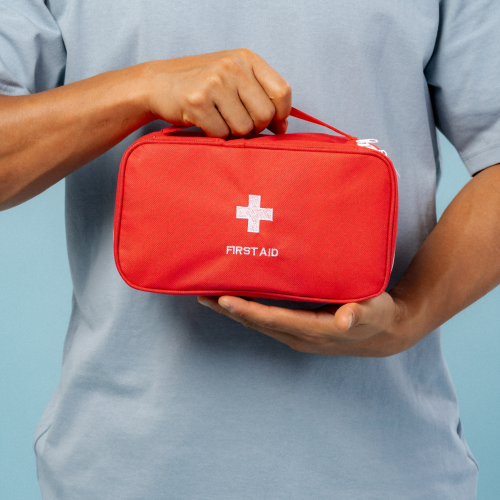
Pack a Proper Travel First Aid Kit
Bring essential medications, especially those for diarrhea and dysentery, oral rehydration salts, and hand sanitizers or alcohol-based hand solutions¹². Ask your pharmacist or consult your doctor before traveling abroad if you’re unsure what to include in your first aid kit.
If you’re going to a country with specific health risks, it may be useful to consult a travel medicine specialist¹³. They can advise you on vector-borne disease prevention, malaria areas, and necessary vaccines or antibiotics.
What to Do If You Get Traveler's Diarrhea?
If you suffer from traveler’s diarrhea, treat it like any other case of acute diarrhea:
Stay Well Hydrated
Diarrhea, vomiting, and tropical climates cause significant water and mineral loss from the body. It’s essential to replace these losses quickly by drinking often: salted and sweetened drinks, plain or sugary water, vegetable broth, white-rice water and herbal teas. Avoid alcohol, coffee, and cold drinks.
For mild to moderate dehydration, oral rehydration solutions (ORS) are recommended—they contain essential elements needed during diarrhea¹⁴ ¹⁵. Usage guidelines may vary by country: seek advice from a healthcare professional.
For severe dehydration, bloody stools, or persistent fever, consult a doctor immediately⁷ ¹⁶.
Children and older adults are more vulnerable to dehydration⁸. If a person is lethargic, not eating or drinking, not urinating, or has a high fever, medical consultation is urgent.

Adjust Your Diet
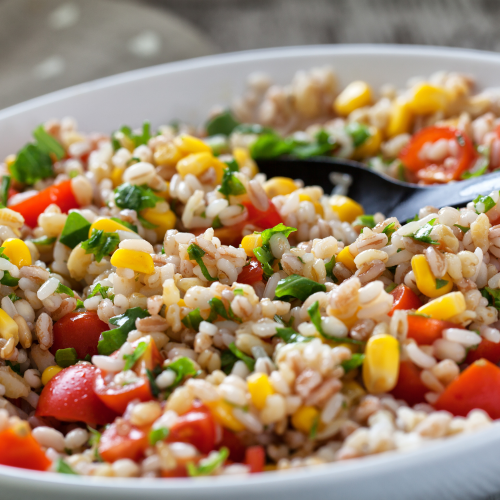
Take care with what you eat. Opt for small, light meals to avoid overloading your digestive system. Choose easy-to-digest foods and avoid spicy dishes that can irritate the intestines¹⁷.
Treat the Diarrhea
Traveler’s diarrhea must be treated like any other acute diarrhea to prevent dehydration and mineral loss.
In addition to the hygiene and dietary recommendations above, symptomatic treatment is advised. Taking adsorbents and intestinal anti-secretory agents can help relieve symptoms. Some probiotic strains may also be helpful¹⁸ ¹⁹.
If symptoms persist, consult a doctor or pharmacist for the most appropriate care¹⁶.
Why Smecta® Is the Right Choice
-
Traps or adsorbs the causal agents or infective agents²⁰ ²¹.
-
Protects and reinforces the intestinal mucosa with its coating capacity²².
-
Clinically validated for most diarrhea types²³.
-
Safe for children and adults²⁴.
-
Recommended by international guidelines in combination with ORS in children²³.
-
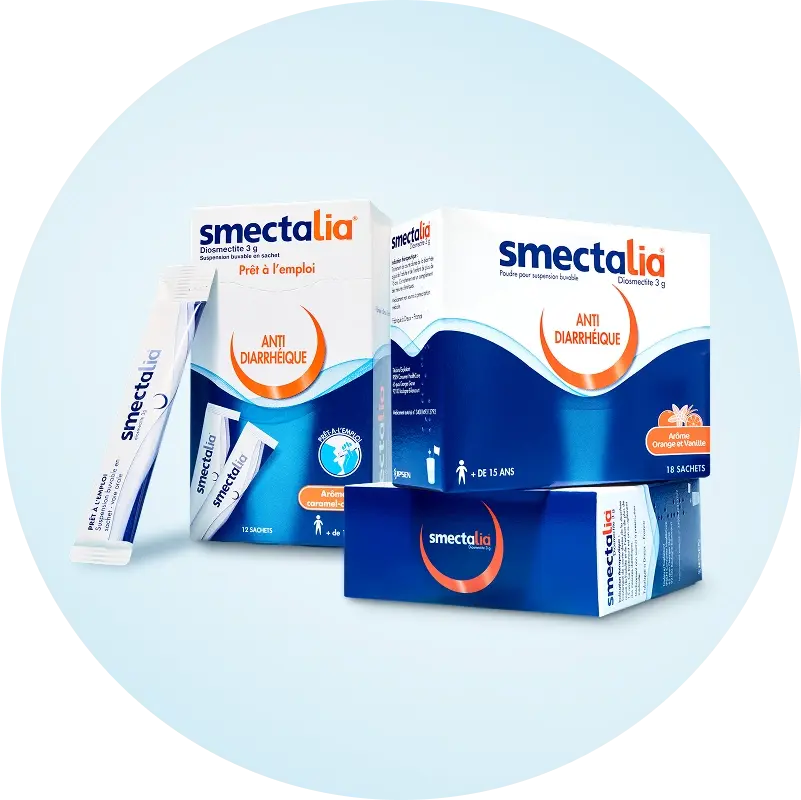
Easy to use – available in Ready to Use Stick.
-
Made from natural ingredients – natural therapeutic clay²⁵.
-
High Quality standards from extraction, purification and release, preserving the properties of a natural clay²⁵.
Smecta doesn’t mask the symptoms – it treats and stops diarrhea fast and supports intestinal recovery with an excellent safety profile²⁴ ²⁵.
FAQ
What is the main cause of traveler’s diarrhea?
Traveler’s diarrhea is primarily caused by ingesting food or water contaminated with bacteria, such as Escherichia coli (E. coli), but can also be due to viruses or parasites¹ ² ³. Poor sanitation and hygiene standards in certain countries increase the risk⁹ ¹⁰.
How long does traveler's diarrhea usually last?
Most cases of traveler’s diarrhea resolve within 3 to 5 days without medical intervention⁵ ⁶. However, if symptoms persist for a week or worsen, a doctor should be consulted⁷.
What foods should I avoid while traveling to prevent traveller's diarrhea?
Avoid raw or undercooked meats, unpasteurized dairy, fresh salads, tap water, ice cubes, and street food. Stick to foods that are freshly cooked and served hot, and drink only sealed bottled water¹⁰ ¹¹ ¹².
Is traveler’s diarrhea contagious?
Yes, it can be contagious, especially through poor hand hygiene or sharing contaminated utensils⁹ ¹³. Always wash hands thoroughly and avoid sharing food or drink.
When should I see a doctor for traveler’s diarrhea?
Seek medical attention if you experience high fever, bloody diarrhea, signs of dehydration (like dizziness or dry mouth), or if symptoms persist for more than a few days, especially in children and older adults who are more vulnerable to dehydration⁷ ⁸ ¹⁶ ²⁴.

Références :
- Graves N. Acute Gastroenteritis. Prim Care Clin Office Pract 2013;40:727–741.
- CDC – Traveler’s Diarrhea. Available from: https://wwwnc.cdc.gov/travel/page/travelers-diarrhea
- Cleveland Clinic – Traveler’s Diarrhea Overview. Available from: https://my.clevelandclinic.org/health/diseases/16092-travelers-diarrhea
- WGO – Traveler’s Diarrhea FAQs. February 2012.
- Mayo Clinic – Traveler’s Diarrhea: Symptoms, Causes & Prevention. Available from: https://www.mayoclinic.org/diseases-conditions/travelers-diarrhea
- CDC – Post-Travel Evaluation. Available from: https://wwwnc.cdc.gov/travel/page/after-travel-diarrhea
- Johns Hopkins Medicine – Traveler’s Diarrhea: Diagnosis & Treatment. Available from: https://www.hopkinsmedicine.org/health/conditions-and-diseases/travelers-diarrhea
- Verywell Health – Traveler’s Diarrhea Treatments. Available from: https://www.verywellhealth.com/travelers-diarrhea-8731105
- CDC – Food and Water Safety While Traveling. Available from: https://wwwnc.cdc.gov/travel/page/food-water-safety
- Better Health Channel (Victoria, Australia) – Traveller’s Diarrhoea Prevention Tips. Available from: https://www.betterhealth.vic.gov.au/health/conditionsandtreatments/travellers-diarrhoea
- WHO – Foodborne Diseases Overview. Available from: https://www.who.int/news-room/fact-sheets/detail/foodborne-diseases
- MedlinePlus – Oral Rehydration Solutions. Available from: https://medlineplus.gov/ency/article/002303.htm
- CDC – Travel Health Precautions & Vaccine Advice. Available from: https://wwwnc.cdc.gov/travel/page/travel-health-information
- Mayo Clinic – Hydration and Rehydration Guidelines.
- MedlinePlus – Oral Rehydration Therapy.
- Johns Hopkins Medicine – When to See a Doctor for Diarrhea.
- NIDDK – Diarrhea Diet Recommendations. Available from: https://www.niddk.nih.gov/health-information/digestive-diseases/diarrhea
- Brouillard MY, Rateau JG. Pouvoir d’adsorption de la smectite. Gastroenterol Clin Biol 1989;13(1):18-24.
- Guarino A, et al. Clinical Role of Diosmectite in the Management of Diarrhea. Expert Opin Drug Metab Toxicol 2009;5(4):433-40.
- Brouillard MY, Rateau JG. Adsorption potency of 2 clays, smectite and kaolin. Gastroenterol Clin Biol 1989;13(1):18-24.
- Droy-Lefaix MT, et al. Influence of Two Antidiarrhoeals on Bacterial Colonization. Rev Inst Pasteur Lyon 1986;19:29-37.
- Serrano JJ. Smectite: Study of the Specific Surface Area and Coating Capacity. Ipsen Report, 1986.
- Dupont C, et al. Oral Diosmectite Reduces Stool Output and Diarrhea Duration in Children with Acute Watery Diarrhea. Clin Gastroenterol Hepatol 2009;7:456-62.
- Smecta SmPC.
- Guarino A, et al. Clinical Role of Diosmectite in the Management of Diarrhea. Expert Opin Drug Metab Toxicol 2009;5(4):433-40.
See more
SCA-GO-002094