
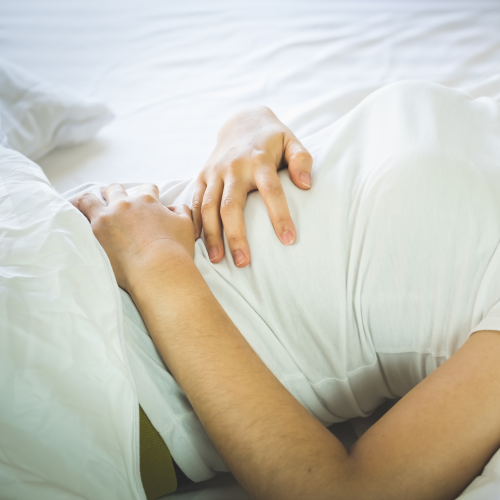
What is acute diarrhea?
Acute diarrhea is a condition marked by a sudden increase in stool frequency (three or more times a day) with a loose or watery consistency¹ ². When symptoms last less than two weeks, it’s classified as acute. Most cases occur without warning and typically resolve within a day or two³.
Statistically, every person experiences at least one episode of acute diarrhea per year⁴. While usually benign, it can still cause discomfort and interfere with daily life.
What Causes Acute Diarrhea?¹⁻⁶ ⁷⁻⁹

Infections
Acute diarrhea is often linked to viral or bacterial intestinal infections, especially when accompanied by fever and malaise¹ ³ ⁷.
- Winter months: Rotavirus, adenovirus, norovirus
- Summer months: Bacterial agents like Salmonella, E. coli, and Shigella
- Travel-related diarrhea: Caused by consuming contaminated street food, poorly stored dishes, or untreated water in exotic countries, frequently due to E.coli.
Emotional Stress
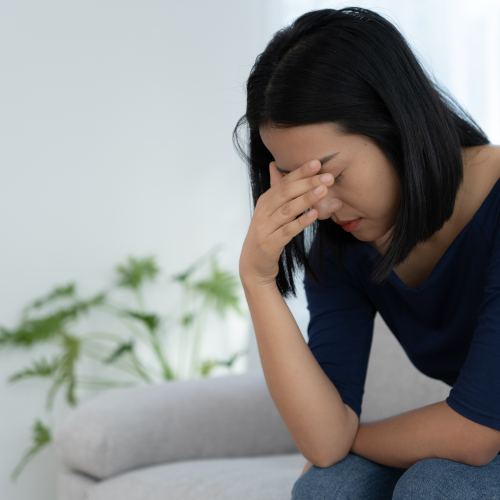
Stress-induced diarrhea is usually part of conditions known as Irritable Bowel Syndrome (IBS) or Functional Diarrhea (FD)⁸.High emotional stress accelerates intestinal contractions, leading to:
- Urgency in bowel movements
- Abdominal pain related to defecation
- A sensation of incomplete evacuation
These symptoms often occur in the morning, especially after breakfast.
Diet and Nutrition Imbalances
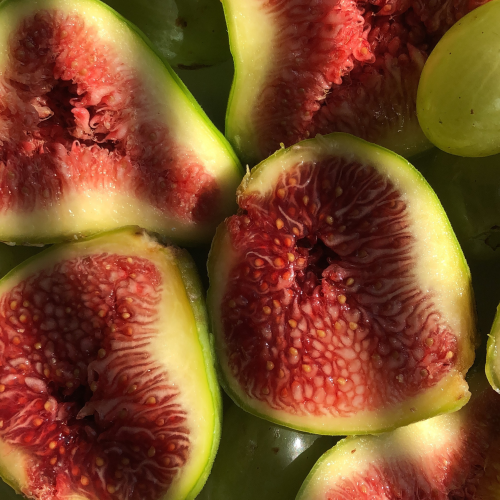
Overconsumption of high-fiber fruits like apricots, figs, or prunes can cause loose stools due to natural laxatives like anthraglycosides⁹. Excessive fiber draws water into the bowel, softening stools.
Even coffee, due to its stimulatory effects on intestinal water secretion and motility, can worsen diarrhea¹⁰. Heavy meals can also be triggers.
Diarrhea can also be the manifestation of underlying diseases that compromise food digestion such as pancreatic insufficiency or bile acid malabsorption¹¹.
Medication Side Effects
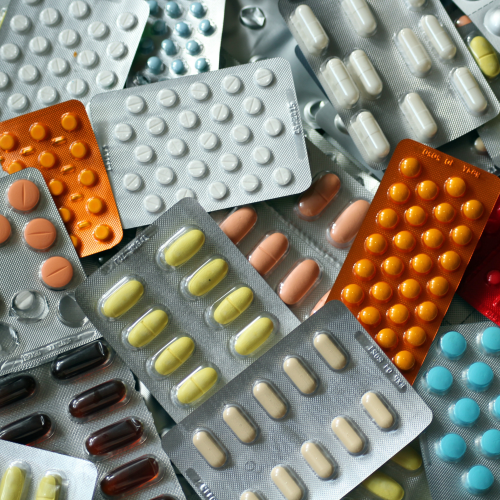
Several medications may cause diarrhea, particularly if taken incorrectly in high doses or chronically¹².
Common culprits include:
-
Proton pump inhibitors (reduce stomach acid and modify the gut microbiota)
-
Magnesium-containing antacids (magnesium may be laxative)
-
NSAIDs (e.g., ibuprofen) (may interfere with the gut protective barrier)
-
Anticoagulants (may be a side effect of some anticoagulants)
-
Certain antidepressants (may alter the composition of gut microbiota)
-
Antibiotics (alter gut microbiota)
Antibiotic-associated diarrhea is often caused by disruption of gut microbiota and may lead to Clostridium difficile overgrowth¹³, which causes toxin-induced intestinal damage. This condition may present with bloody diarrhea and can persist weeks after stopping the medication.

Food Poisoning and Allergic Reactions
Contaminated or poorly stored food—such as seafood, unpasteurized dairy, pastries, or undercooked meat—can trigger acute diarrhea¹⁴.
✅ Keep your refrigerator clean and always check expiration dates.
❗ Avoid raw meat, dairy, or seafood if not properly stored.
How to Treat Acute Diarrhea
Medical Treatments
Depending on the cause, a healthcare provider may recommend in addition to dietary recommendations:
Different treatment options exist depending on the cause of digestive issues. Enterosorbents act by adsorbing toxins and pathogens directly in the gut¹⁶. Antibiotics are prescribed only in cases of confirmed bacterial infections¹³. Probiotics help restore the balance of gut microbiota, while enzymes can be used to assist digestion when pancreatic problems are involved¹¹.
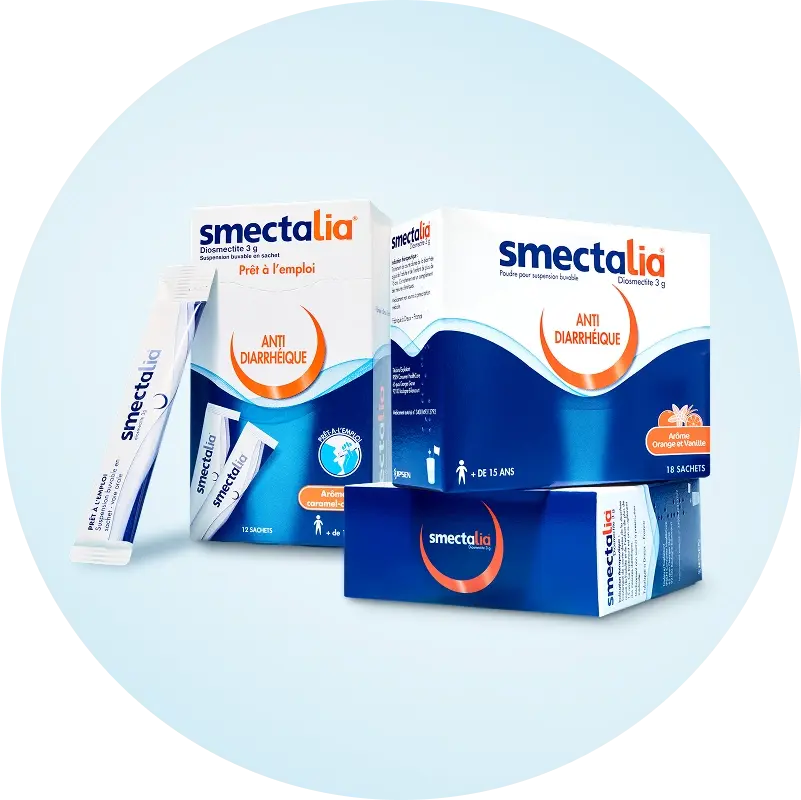
Why Smecta® Is the Right Choice
-
Traps or adsorbs the causal agents or infective agents¹⁷ ¹⁸.
-
Protects and reinforces the intestinal mucosa with its coating capacity¹⁹.
-
Clinically validated for most diarrhea types²⁰.
-
Safe for children and adults²¹.
-
Recommended by international guidelines in combination with ORS in children²⁰.
-
Easy to use – available in Ready to Use Stick.
-
Made from natural ingredients – natural therapeutic clay²².
-
High Quality standards from extraction, purification and release, preserving the properties of a natural clay²².
Smecta doesn’t mask the symptoms – it treats and stops diarrhea fast and supports intestinal recovery with an excellent safety profile²¹ ²².
FAQ
How long does acute diarrhea usually last?
Most cases resolve within 1–2 days without treatment²³.
When should I see a doctor?
If diarrhea persists beyond 2 days without improvement, or presents >10 times a day, includes blood, or is accompanied by high fever or dehydration symptoms²³ ²⁴.
Can antibiotics cause diarrhea?
Yes. They disrupt the intestinal microbiota and can lead to antibiotic-associated diarrhea, including C. difficile infection¹³ ²⁵.
What should I eat during acute diarrhea?
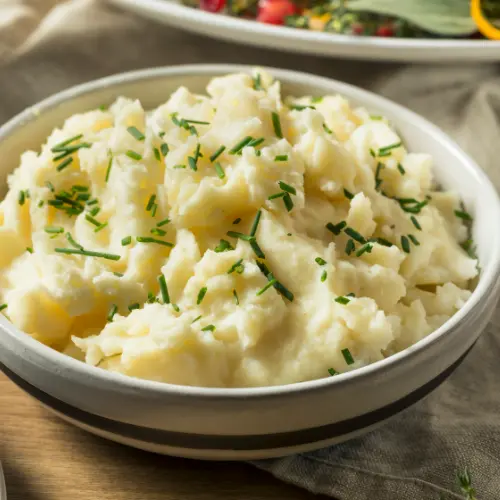
Simple, non-fatty foods like rice, bananas, toast, and clear broths²⁶.
Can stress really cause diarrhea?
Absolutely. Stress affects gut motility, leading to symptoms typical of IBS⁸ ²⁷.

Références :
- Graves N. Acute Gastroenteritis. Prim Care Clin Office Pract 2013;40:727–741.
- Barr W, Smith A. Acute Diarrhea in Adults. Am Fam Physician. 2014;89(3):180–189.
- WGO. Acute diarrhea in adults and children: a global perspective. February 2012.
- World Health Organization (WHO). Diarrheal Disease Overview. https://www.who.int/news-room/fact-sheets/detail/diarrhoeal-disease
- Mayo Clinic. Diarrhea: Causes and Treatments. https://www.mayoclinic.org/diseases-conditions/diarrhea
- Monash University. FODMAP and Irritable Bowel Syndrome. https://www.monashfodmap.com/about-fodmap-and-ibs/
- Lyra NRS, et al. Adverse Reactions to Foods and Food Allergy. J Allergy 2013, Article ID 920679.
- Zopf Y, et al. The Differential Diagnosis of Food Intolerance. Dtsch Arztebl Int 2009;106(21):359–70.
- Chiba T, Philips SF. Alcohol-related diarrhea. Addict Biol 2000;5(2):117–25.
- National Institute of Diabetes and Digestive and Kidney Diseases (NIDDK). Diarrhea: Symptoms & Causes.
- Cleveland Clinic. Bile acid malabsorption and pancreatic insufficiency overview.
- Healthline. Medications That May Cause Diarrhea.
- CDC. Antibiotic-associated diarrhea and C. difficile infections.
- WHO. Foodborne diseases. https://www.who.int/health-topics/foodborne-diseases#tab=tab_1
- MedlinePlus. Oral Rehydration Solutions.
- Brouillard MY, Rateau JG. Pouvoir d’adsorption de la smectite. Gastroenterol Clin Biol 1989;13(1):18–24.
- Brouillard MY, Rateau JG. Adsorption potency of 2 clays, smectite and kaolin. Gastroenterol Clin Biol 1989;13(1):18–24.
- Droy-Lefaix MT, et al. Influence of two antidiarrhoeals on bacterial colonization of intestinal mucosa by Campylobacter jejuni. Rev Inst Pasteur Lyon 1986;19:29–37.
- Serrano JJ. Smectite: Study of the specific surface area, coating capacity and antiulcerative activity. Ipsen report, 1986.
- Dupont C, et al. Oral diosmectite reduces stool output and diarrhea duration in children with acute watery diarrhea. Clin Gastroenterol Hepatol 2009;7:456–62.
- SmPC of Smecta®.
- Guarino A, et al. Clinical role of diosmectite in the management of diarrhea. Expert Opin Drug Metab Toxicol 2009;5(4):433–40.
- Mayo Clinic. Acute Diarrhea: Duration and management.
- Johns Hopkins Medicine. When to see a doctor for diarrhea.
- CDC. C. difficile Infection (CDI) Prevention.
- NIDDK. Diarrhea Diet Recommendations.
- Harvard Health. How stress affects digestion.
See more
SCA-GO-002094