
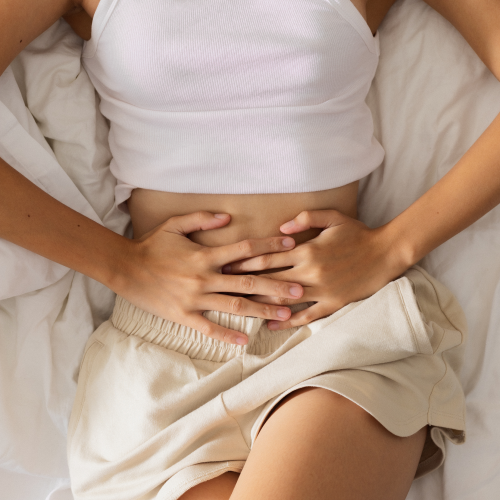
Why Does Diarrhea Happen During Menstruation?
Many people experience diarrhea just before or during their period, commonly known as « period poops. » Research shows that about 25–33% of menstruating individuals report gastrointestinal changes like diarrhea during menses¹ ² ³ ⁴ ⁵.
The main trigger is a surge in prostaglandins, hormone-like compounds produced in the uterine lining before menstruation to induce contractions and shed tissue. These prostaglandins also impact nearby intestinal muscles, accelerating gut contractions, increasing fluid secretion, and reducing absorption, ultimately triggering loose stools¹ ² ³.
Prostaglandin levels are highest at the onset of menstruation, explaining why diarrhea often peaks on day one² ³ ⁵. Simultaneously, progesterone levels drop, which removes its usual slowing effect on gut motility and further increases intestinal activity² ⁶ ⁷.
Who Might Be More Prone?
Certain conditions and lifestyle factors can make period diarrhea more severe:
- Endometriosis: with bowel involvement in many cases, endometriosis may lead to gastrointestinal symptoms during menstruation, such as diarrhea³ ⁶.
- Irritable Bowel Syndrome (IBS) or IBD: Hormonal shifts during menstruation may exacerbate existing GI conditions, increasing both diarrhea and discomfort³ ⁶ ⁷.
- Dietary changes and stress: Cravings, altered eating habits, and anxiety during PMS can further disrupt digestive regularity⁴ ⁷ ⁸.
Effective Ways to Manage Period-Related Diarrhea
Stay Hydrated
Drink plenty of water, herbal teas (peppermint or chamomile), broth, or oral electrolyte solutions to make up for fluid loss³ ⁶.
Optimize Your Diet
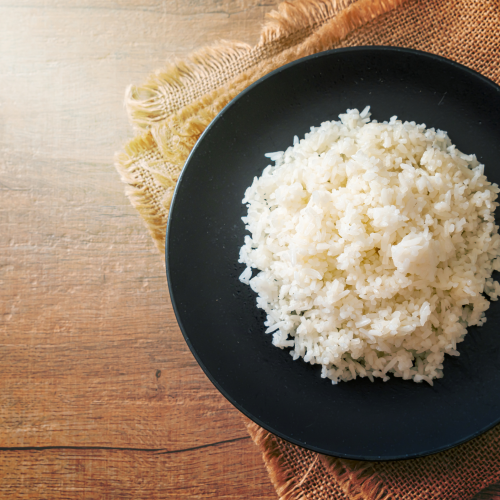
- Choose binding, bland foods like bananas, rice, applesauce, toast (the BRAT diet)³.
- Avoid irritating items like caffeine, alcohol, fried or spicy foods, and dairy if sensitive² ³.
- Increase soluble fibre to bulk stools, oats, applesauce, bananas, legumes, brown rice, especially helpful when transitioning from pre-period constipation to diarrhea³ ⁴.
Ease Stress Levels
Stress can worsen gastrointestinal symptoms via the gut-brain axis⁷ ⁸. Techniques such as breathing exercises, meditation, light walking, or yoga help regulate digestion and emotional tension⁷ ⁸.
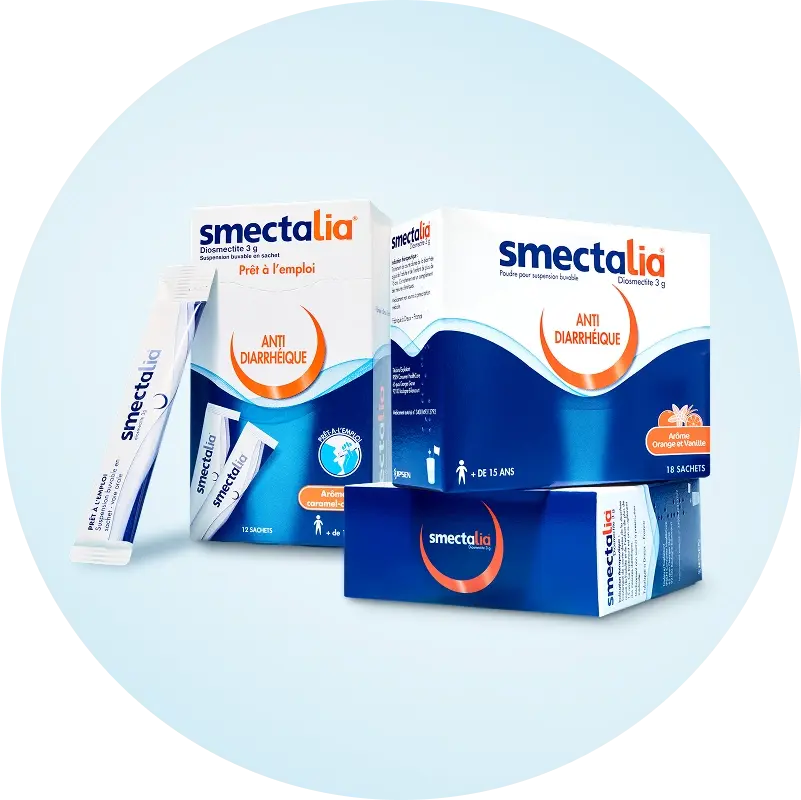
Why Smecta® Is the Right Choice
- Traps or adsorbs the causal agents or infective agents¹⁰ ¹¹
- Protects and reinforces the intestinal mucosa with its coating capacity¹²
- Clinically validated for most diarrhea types¹³ ¹⁴
- Safe for children and adults⁹
- Recommended by international guidelines in combination with ORS in children¹³
- Easy to use – available in Ready to Use Stick⁹
- Made from natural ingredients – natural therapeutic clay¹⁴
- High quality standards from extraction, purification and release, preserving the properties of a natural clay⁹ ¹⁴
Smecta doesn’t mask the symptoms – it treats and stops diarrhea fast and supports intestinal recovery with an excellent safety profile⁹ ¹⁴
FAQ
Is diarrhea during my period normal?
Yes—about 25–33% of people experience it, typically due to prostaglandin-induced gut contractions¹ ² ³ ⁴ ⁵.
Why does it often start on the first day?
Prostaglandin levels peak right before and at the beginning of menstruation, accelerating intestinal movement² ³ ⁵.
Could other health issues be involved?
Yes—conditions like IBS, IBD, or endometriosis may intensify symptoms³ ⁶ ⁷. Severe or persistent diarrhea should be evaluated by a healthcare provider.
When should I see a doctor?
If symptoms last longer than 3–5 days, include blood or severe pain, interfere with your daily life, or if you suspect a chronic condition² ³.
When should I take my child to the doctor for diarrhea?
If symptoms persist over two days without improvement, or if high fever, dark stools, vomiting or dehydration is suspected³ ⁶.
Références :
- Verywell Health. Causes of Diarrhea During Your Period & How to Manage It. Available from: https://www.verywellhealth.com
- Medical News Today. Diarrhea During Period: Causes, Treatment and More. Available from: https://www.medicalnewstoday.com
- Houghton LA, et al. Gastrointestinal symptoms before and during menses in healthy women. PMC. 2014. Available from: https://www.ncbi.nlm.nih.gov/pmc
- Canadian Digestive Health Foundation (CDHF). Period Poop 101. Available from: https://cdhf.ca
- Time. Why We Get “Period Poops” and What to Do About Them. Available from: https://time.com
- Verywell Health. 4 Causes of Period Poops and How to Deal With Them. Available from: https://www.verywellhealth.com
- Harvard Health. Why Your Period Affects Your Digestion. Available from: https://www.health.harvard.edu
- National Institutes of Health (NIH). Gut–Brain Axis Overview. Available from: https://www.ncbi.nlm.nih.gov
- Patient information leaflet – Smecta, powder for oral suspension [orange, vanilla-strawberry], 3 g. 18/03/2024.
Patient information leaflet – Smecta, oral paste, 3 g. 17/04/2024. - Brouillard MY, Rateau JG. Pouvoir d’adsorption de deux argiles, la smectite et le kaolin, sur des entérotoxines bactériennes. Étude in vitro sur culture cellulaire et sur intestin de souriceau nouveau-né. Gastroenterol Clin Biol. 1989;13(1):18–24.
- Droy-Lefaix MT, et al. Influence of two antidiarrhoeals on bacterial colonization of intestinal mucosa by Campylobacter jejuni and retention of its integrity. Rev Inst Pasteur Lyon. 1986;19:29–37.
- Serrano JJ. Smectite: Study of the specific surface area, coating capacity and antiulcerative activity. Ipsen Report. 1986.
- Dupont C, et al. Oral diosmectite reduces stool output and diarrhea duration in children with acute watery diarrhea. Clin Gastroenterol Hepatol. 2009;7:456–62.
- Guarino A, et al. Clinical role of diosmectite in the management of diarrhea. Expert Opin Drug Metab Toxicol. 2009;5(4):433–40.
See more
SCA-GO-002499