
Introduction to Natural Approaches in Digestive Health
Digestive discomfort, particularly diarrhea, can appear suddenly and affect daily life. Whether caused by infection, food intolerance, or stress, finding a product that works in harmony with the body is often a priority. Smecta® offers a response based on a high-quality natural clay² ³, providing a non-invasive solution to help manage such episodes.
Diosmectite: The Natural Clay Behind Smecta®
Diosmectite is a naturally occurring aluminosilicate clay. It is mined, purified, and used for its physico-chemic properties that confer its unique properties of trapping ‘bad bugs’ in the intestine (pathogens) and protection of the digestive tract⁴ ⁵. It is not absorbed and stays and acts locally in the digestive system.⁶ ⁷
Origin and Composition
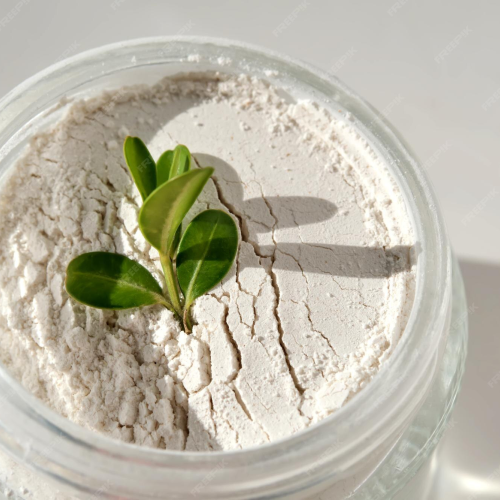
This clay is formed from natural geological processes and contains small particles with a specific arrangement of silica, aluminum, and magnesium. Its physical structure—flat particles layered like sheets—makes it capable of interacting with fluids, pathogens, and substances in the gut⁸ ⁹.
Physico-Chemical Activity in the Gut
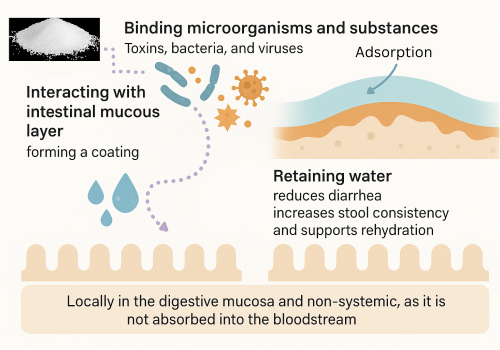
Diosmectite functions by:
-
Binding microorganisms and substances in the gut such as toxins, bacteria, and viruses through adsorption¹⁰ ¹¹ ¹².
-
Interacting with the intestinal mucous layer, forming a coating that helps maintain the integrity of the gut lining¹⁰ ¹¹.
-
Retaining water, which reduces diarrhea, increases stool consistency and supports rehydration¹².
These properties are exerted locally in the digestive mucosa and non-systemic, as it is not absorbed into the bloodstream.
Smecta® as a Natural Product
The active ingredient in Smecta®, diosmectite, is selected and processed to maintain its structure and activity, allowing it to act directly in the gut¹³. Because it is not absorbed into the bloodstream, its action remains localized in the gut¹³.
Smecta® does not contain synthetic active substances. However, it may include certain ingredients such as preservatives, flavors, or sweeteners to ensure product stability and taste. Its formulation remains gentle on the body¹³.
Scientific Context
Numerous studies have explored the role of natural clays like diosmectite in gastrointestinal health. Findings indicate that diosmectite can help:
-
Reduce the frequency and duration of diarrhea¹⁴.
-
Support the gut barrier¹⁵.
-
Bind harmful substances in the intestines¹⁶.
This evidence supports the use of diosmectite-based products in both clinical and home care settings¹⁴ ⁻ ¹⁶.
Smecta presents a natural clay-based option for those managing diarrhea and abdominal pain. By using diosmectite, a clay with established physico-chemical properties, Smecta® offers a clinically proven way to support gut health without relying on synthetic ingredients or systemic drug action, with an excellent safety profile, both in children and adults.
By choosing Smecta®, individuals and families have access to a natural, efficacious, and safe clay-based treatment option that has been used since 1975 by families, children, and adults, all over the world¹⁷.
Why Smecta® Is the Right Choice
-
Traps or adsorbs the causal agents or infective agents¹ ¹⁸.
-
Protects and reinforces the intestinal mucosa with its coating capacity¹⁹.
-
Clinically validated for most diarrhea types¹⁴ ¹⁵ ¹⁶.
-
Safe for children and adults².
-
Recommended by international guidelines in combination with ORS in children²⁰.
-
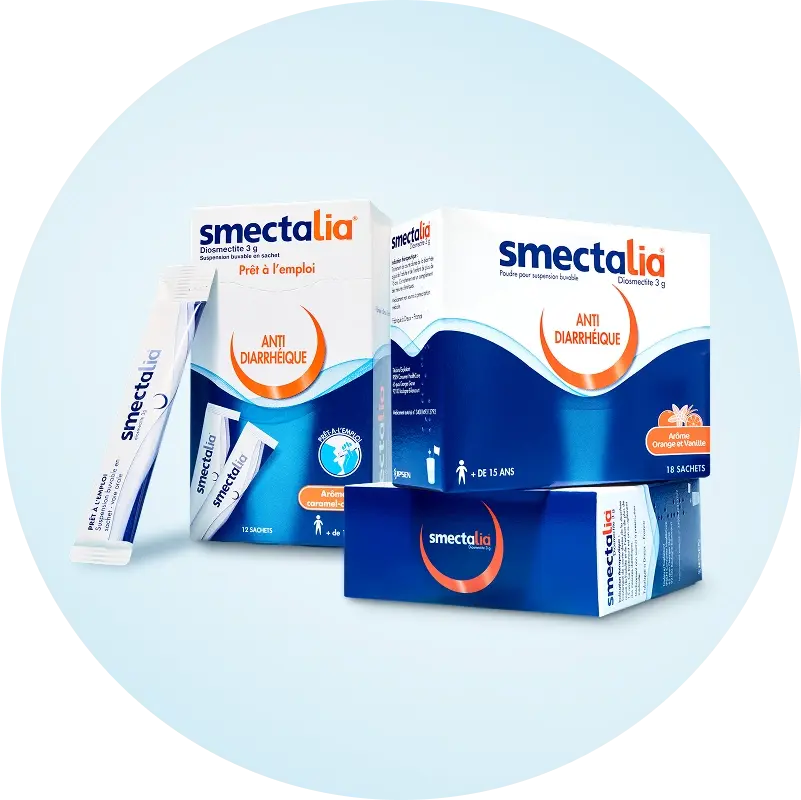
Easy to use – available in Ready to Use Stick.
-
Made from natural ingredients – natural therapeutic clay³.
-
High Quality standards from extraction, purification and release, preserving the properties of a natural clay³.
Smecta® doesn’t mask the symptoms – it treats and stops diarrhea fast and supports intestinal recovery with an excellent safety profile² ³.
FAQ
What is diosmectite and where does it come from?
Diosmectite is a natural mineral clay belonging to the smectite family¹. It is composed primarily of aluminosilicates and is sourced from specific geological deposits⁸ ⁹. After extraction, it undergoes purification to prepare it for medical use in digestive health applications⁶ ⁷.
How does diosmectite work in the digestive system?
Diosmectite acts through physico-chemical mechanisms¹⁰ ¹¹ ¹². It adsorbs toxins, bacteria, and viruses present in the gastrointestinal tract¹ ¹⁸ and reinforces the intestinal mucosal barrier¹⁹. It does not enter the bloodstream and works locally in the gut² ³.
Is diosmectite absorbed into the body?
No, diosmectite is not absorbed². It remains within the digestive tract and is eliminated from the body. This local action helps reduce the risk of systemic effects and ensures its excellent safety profile³ ¹⁶.
What types of digestive issues is diosmectite used for?
Diosmectite is commonly used to manage symptoms of acute diarrhea¹⁴ ¹⁵ ²⁰. It is also applied in cases of functional chronic diarrhea and abdominal pain related to functional bowel disorders³ ¹⁶.
Can diosmectite affect the gut microbiota?
Studies suggest that diosmectite does not alter the gut microbiota¹⁶. Its activity is focused on binding harmful substances and pathogens¹ ¹⁸ and protecting the intestinal lining rather than disrupting the microbial balance³ ¹⁹.
It is usually well tolerated except for children with severe diarrhea²⁰. In breastfed kids, continuing breastfeeding is highly recommended, alone or complemented by ORS²⁰.


Références :
- Brouillard MY, Rateau JG. Adsorption potency of 2 clays, smectite and kaolin. Gastroenterol Clin Biol 1989;13(1):18–24.
- SmPC of Smecta®.
- Guarino A, et al. Clinical role of diosmectite in the management of diarrhea. Expert Opin Drug Metab Toxicol 2009;5(4):433–40.
- Ghadiri M, Chrzanowsk W, Rohanizadeh R. Biomedical applications of cationic clay minerals. RSC Adv. 2015;5:29467–81.
- Williams LB. Geomimicry: harnessing the antibacterial action of clays. Clay Minerals 2017;52:1–24.
- Carretero I, Pozo M. Clay and non-clay minerals in the pharmaceutical and cosmetic industries. Appl Clay Sci 2010;47(3-4):171–181.
- Rautureau M, Caillere S, Hénin S. Les argiles. Éditions Septima, 2004.
- Ghadiri M, Chrzanowsk W, Rohanizadeh R. Biomedical applications of cationic clay minerals. RSC Adv. 2015;5:29467–81.
- Williams LB. Geomimicry: harnessing the antibacterial action of clays. Clay Minerals 2017;52:1–24.
- Martirosian G, Rouyan G, Zalewski T, Meisel-Mikolajczyk. Dioctahedral Smectite Neutralization Activity of Clostridium difficile and Bacteroides fragilis Toxins in vitro. Acta Microbiol Pol 1998;47(2):177–83.
- SmPC of Smecta®.
- Guarino A, et al. Smectite in the Treatment of Acute Diarrhea: A Nationwide Randomized Controlled Study. J Pediatr Gastroenterol Nutr 2001;32:71–75.
- Guarino A, Lo Vecchio A, Pirozzi MR. Clinical role of diosmectite in the management of diarrhea. Expert Opin Drug Metab Toxicol 2009;5:433–40.
- Dupont C. Anti-Diarrheal Effects of Diosmectite in the Treatment of Acute Diarrhea in Children. PubMed Central, 2012.
- Khediri F, et al. Efficacy of Diosmectite (Smecta®) in the Treatment of Acute Watery Diarrhea in Adults. Gastroenterol Res Pract 2011;2011:783196.
- Da Silva A, et al. Long-term Diosmectite Use Does Not Alter the Gut Microbiota in Adults with Chronic Diarrhea. BMC Microbiol 2022.
- PSUR on diosmectite, 11 January 2019.
- Droy-Lefaix MT, et al. Influence of two antidiarrhoeals on bacterial colonization of intestinal mucosa by Campylobacter jejuni and retention of its integrity. Rev Inst Pasteur Lyon 1986;19:29–37.
- Serrano JJ. Smectite: Study of the specific surface area, coating capacity and antiulcerative activity. Ipsen report, 1986.
- Dupont C, et al. Oral diosmectite reduces stool output and diarrhea duration in children with acute watery diarrhea. Clin Gastroenterol Hepatol 2009;7:456–62.
See more
SCA-GO-002094