
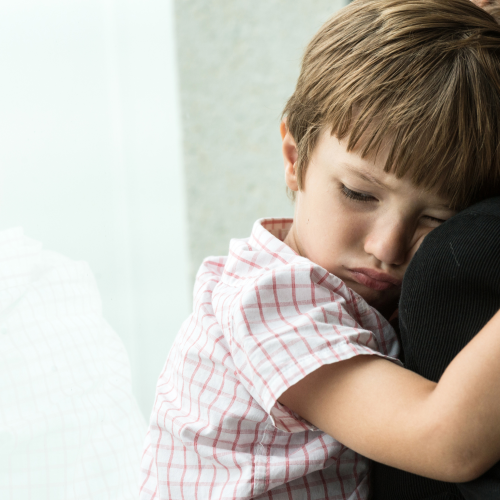
Diarrhea in children is a frequent condition that ranges from mild and self-limiting to severe and requiring urgent medical care¹ ². The occurrence of watery stools, often accompanied by vomiting, can lead to rapid dehydration if not managed correctly¹ ³. This science-backed article about kids diarrhea covers its causes, dietary strategies, hydration methods, and when to seek professional intervention³ ⁴.
Understanding Diarrhea in Children
What Constitutes Diarrhea in a Child?
In clinical terms, diarrhea in children is defined as the passage of three or more loose or watery stools within 24 hours¹ ². It is crucial to consider the child’s baseline bowel habits, as frequency varies with age and diet¹.
Diarrhea may be:
- Acute: lasting less than 14 days
- Chronic: persisting for more than two weeks, often requiring investigation into underlying causes³.
Acute vs. Chronic Diarrhea in Childhood
- Acute diarrhea is often caused by infections (viral, bacterial, or parasitic) and resolves with supportive care¹ ³.
- Chronic diarrhea may be linked to malabsorption, food intolerances, or gastrointestinal diseases such as lactose malabsorption or celiac disease² ⁵.
Common Causes of Diarrhea in Children
Acute Viral Gastroenteritis
Acute viral gastroenteritis refers to an infection of the stomach and intestines caused by viruses¹ ². It’s the most frequent cause of diarrhea in children and is usually self-limiting³. Common viruses include:
-
Rotavirus
-
Norovirus
-
Adenovirus
These viruses affect the lining of the intestines, resulting in watery stools and cramping¹. They may also cause vomiting³ ⁴.

Bacterial and Parasitic Triggers
Children may also acquire acute gastroenteritis or diarrhea through bacterial or parasitic infections such as:
-
Salmonella
-
Campylobacter
-
Giardia lamblia
These often present with fever, bloody diarrhea, and abdominal discomfort² ³.
Food Intolerances and Allergies in Children
Common food-related causes of diarrhea include² ⁵:
- Lactose intolerance
- Fructose malabsorption
- Celiac disease
These conditions lead to chronic loose stools, bloating, and poor growth if not managed correctly⁴.


Diarrhea After Antibiotic Use in Kids
A common concern among parents is diarrhea after antibiotics in children. Antibiotics often disrupt the gut microbiota, leading to diarrhea³ ⁶.
This form usually resolves on its own or improves with probiotic support⁶ ⁷.
Chronic Diarrhea and Long-Term Monitoring
Recurrent loose stool in children should prompt dietary evaluation, stool testing, and growth monitoring³. Long-term causes may include⁵:
- Gluten sensitivity
- Parasitic infections
- Irritable bowel syndrome
Recognizing the Symptoms
Understanding the Risk of Dehydration
How to Keep a Child Hydrated with Diarrhea
Best practices include³ ⁴:
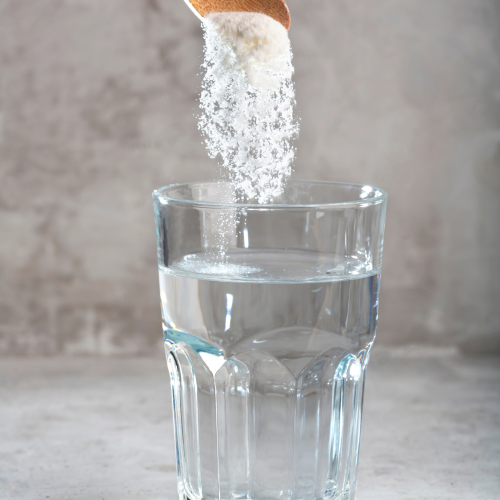
- Ensure oral rehydration with oral rehydration solutions (ORS): a teaspoonful every 1-2 min in children < 2 years-old or frequent sips from a cup for older children.
- Avoiding sugary or caffeinated drinks.³ ⁴
- Seek medical advice if symptoms persist¹ ⁵.
Hydration should be monitored closely, especially during the first 24–48 hours of illness¹ ³.
Dietary Support for Kids with Diarrhea
When to Seek Medical Attention
Signs That Require a Doctor’s Evaluation
Consult your healthcare provider if your child¹ ²:
- Presents >6 episodes of diarrhea in the past 24h, or presents diarrhea and vomits at the same time or has diarrhea lasting more than 2 days with no improvement,
- Passes stools that are dark or black or with mucus.
- Has fever > 38.9°C
- Drinks poorly
- Appears unusually drowsy or irritable
- Presents dry mouth or tongue or cries without tears.
When to Go to the ER for Child Diarrhea
Emergency care is warranted if there are signs of severe dehydration¹ ³.
The child may be unresponsive, have sunken eyes, or refuse to drink³ ⁴.
Preventive Measures
Hygiene Education and Food Safety Tips
To reduce recurrence³ ⁵:
- Wash hands regularly with soap and water
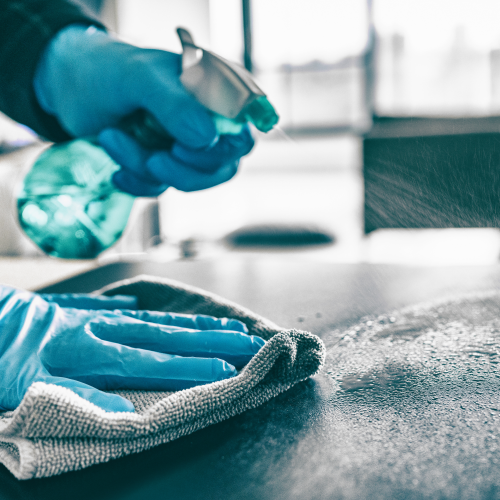
- Disinfect commonly touched surfaces
- Avoid raw or undercooked meat
- Ensure drinking water is clean and safe
Diarrhea in children is common but manageable with the right approach¹ ³ ⁵.
Hydration, safe dietary choices, and timely use of probiotics (for children aged 2+) are key to supporting recovery⁶ ⁷.
Always consult your healthcare provider when in doubt³ ⁴.
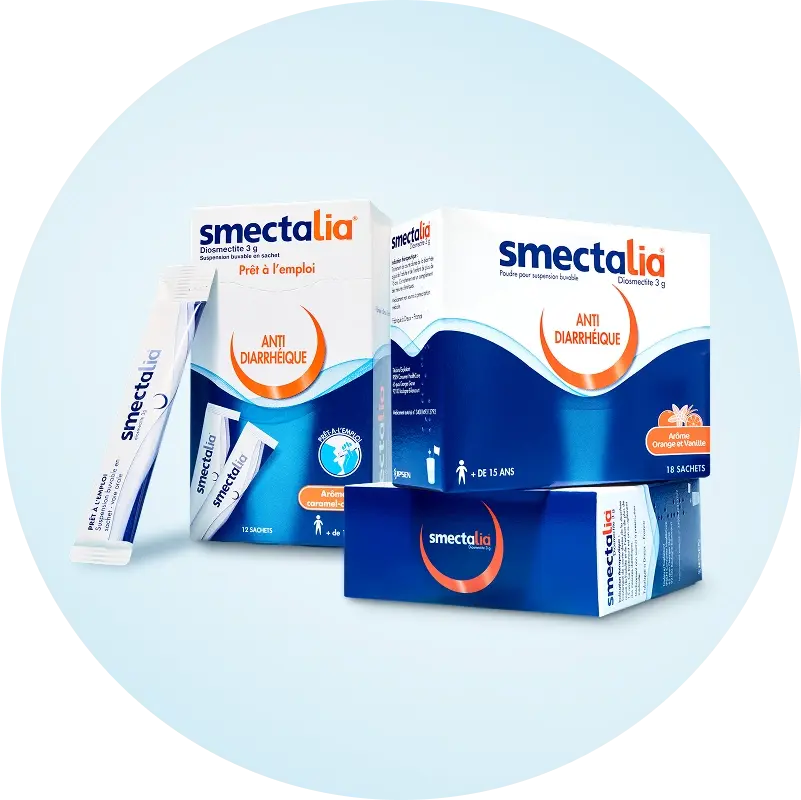
Why Smecta® Is the Right Choice
- Traps or adsorbs the causal agents or infective agents⁸ ⁹
- Protects and reinforces the intestinal mucosa with its coating capacity¹⁰
- Clinically validated for most diarrhea types¹¹
- Safe for children and adults¹²
- Recommended by international guidelines in combination with ORS in children¹¹
- Easy to use – available in Ready to Use Stick
- Made from natural ingredients – natural therapeutic clay¹³
- High Quality standards from extraction, purification and release, preserving the properties of a natural clay¹³
Smecta doesn’t mask the symptoms – it treats and stops diarrhea fast and supports intestinal recovery with an excellent safety profile¹² ¹³.
FAQ
What causes diarrhea in kids most commonly?
Viral gastroenteritis, especially rotavirus, is the leading cause¹ ² ³.
What to give a child with diarrhea to eat?
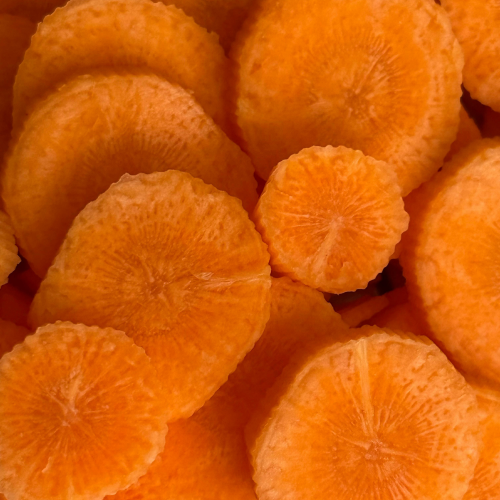
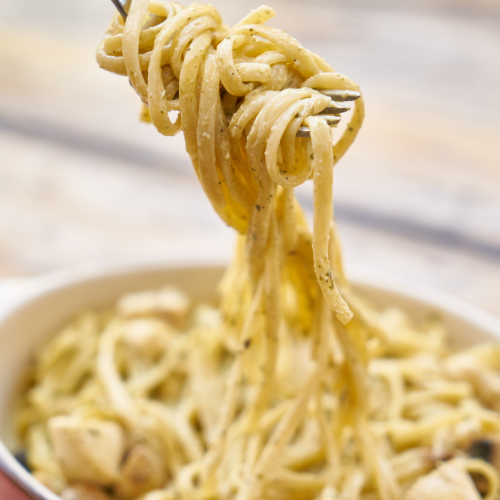
BRAT diet foods, plain pasta, and well-cooked vegetables³ ⁴.
How to keep a child hydrated during diarrhea?
Use ORS, offer water frequently, and continue normal feeding where possible³ ⁴.
Is milk bad for diarrhea in kids?
It is usually well tolerated except for children with severe diarrhea. In breastfed kids, continuing breastfeeding is highly recommended, alone or complemented by ORS³ ⁵.
When should I take my child to the doctor for diarrhea?
If symptoms persist over two days without improvement, or if high fever, dark stools, vomiting, or dehydration is suspected¹ ³ ⁴.


Références :
- World Health Organization (WHO). Diarrhoeal Disease: Key Facts.
- Mayo Clinic. Diarrhea in children: Causes and treatments.
- Centers for Disease Control and Prevention (CDC). Managing childhood diarrheal illness and gastroenteritis.
- NHS (UK National Health Service). Diarrhea and vomiting in children: advice for parents.
- Cleveland Clinic. Pediatric diarrhea: Causes, diagnosis, and treatment.
- Dupont C, Vernisse B. Anti-Diarrheal Effects of Diosmectite in Children. Pediatr Drugs. 2009;11(2):89–99.
- Da Silva MF, et al. Long-term diosmectite use and gut microbiota in adults with chronic diarrhea. BMC Microbiol. 2022;22:2464.
- Brouillard MY, Rateau JG. Gastroenterol Clin Biol. 1989;13(1):18–24.
- Droy-Lefaix MT, et al. Rev Inst Pasteur Lyon. 1986;19:29–37.
- Serrano JJ. Ipsen Report. 1986.
- Dupont C, et al. Clin Gastroenterol Hepatol. 2009;7:456–62.
- Smecta. Summary of Product Characteristics (SmPC).
- Guarino A, et al. Expert Opin Drug Metab Toxicol. 2009;5(4):433–40.
See more
SCA-GO-002094