
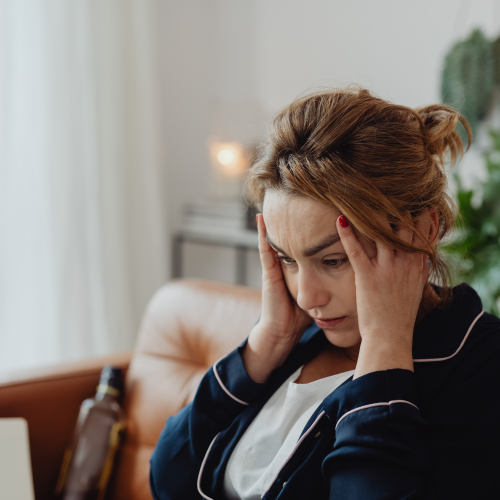
Why Stress Affects Your Bowels
Stress can have a direct impact on your digestive system, and one of the most common reactions is stress-induced diarrhea¹ ³ ¹³ ¹⁴.
How Does Anxiety Cause Diarrhea?
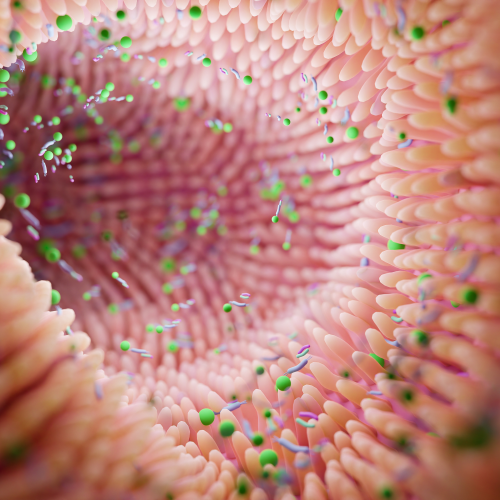
The explanation lies in a powerful system called the gut–brain axis² ¹². This communication loop between your brain and your digestive tract allows the brain to influence the gastrointestinal system via the enteric nervous system, which controls gut motility and secretion.
In stressful moments, your body activates the fight-or-flight response, releasing stress hormones like adrenaline and cortisol¹³ ¹⁴ ¹⁵. This response speeds up digestion and can cause the colon to move contents too quickly, preventing proper water absorption, resulting in loose stools.
So yes, your nerves can genuinely « trigger the runs » before anxiety-inducing situations like exams or public speaking³ ¹³.
How to Reduce Stress Diarrhea Before It Starts
If you know you’re prone to digestive issues under pressure, there are techniques that can help calm both your mind and gut:
- Controlled breathing: Deep, slow breaths activate your body’s relaxation response.
- Walk around: Gentle movement can reduce muscle tension and anxiety.
- Light stretching or yoga: Helps lower stress hormones and stabilize digestion¹⁵.
- Self-kindness: Treat yourself with the same care you’d give a friend in distress.
- Grounding activities: Focus on your environment—look for colors, listen to sounds, feel textures.
- Mental distractions: Count backward, sing a song in your head, recall a favorite recipe.
- Reach out: Hearing a familiar voice can ground you and shift your focus from stress.



If Diarrhea Already Happens
Don’t panic. Here’s how you can help your body recover and prevent it from getting worse:
Stay Hydrated
Drink water or oral rehydration solutions to replace lost fluids and electrolytes. ⁸
To help maintain potassium levels, you may drink some fruit juices such as pomegranate, banana, tomato, or carrot. Consume them in moderation
Adjust Your Diet
Avoid foods that might worsen diarrhea, including:
- Fatty or fried meals
- Spicy or highly seasoned dishes
- Sweets, caffeine, and alcohol
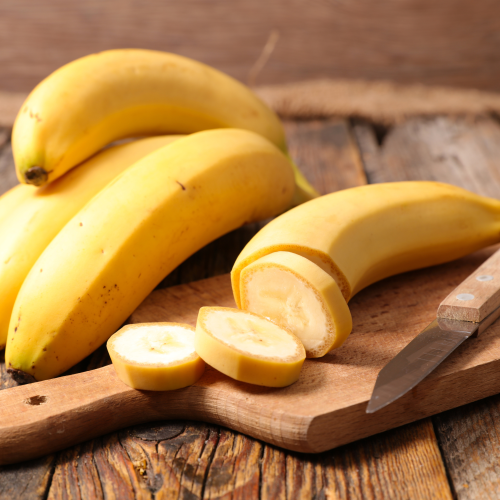
Stick to gentle, easily digestible meals like plain rice, toast, bananas, or applesauce. ³ ⁴ ¹⁵
Stress and Irritable Bowel Syndrome (IBS)
Ongoing stress can lead to more serious conditions like IBS, which often includes chronic diarrhea, constipation, or both. ¹ ⁶ ¹⁰ ¹¹
Studies show that a large percentage of people with anxiety or depression also report recurring digestive issues¹⁰ ¹¹. IBS is thought to involve a hypersensitive colon, making it overreact to food or emotional stress¹.
Thanks to the gut–brain connection, stress worsens IBS, and in turn, living with IBS can negatively affect mood—creating a cycle of discomfort² ¹² ¹⁴.
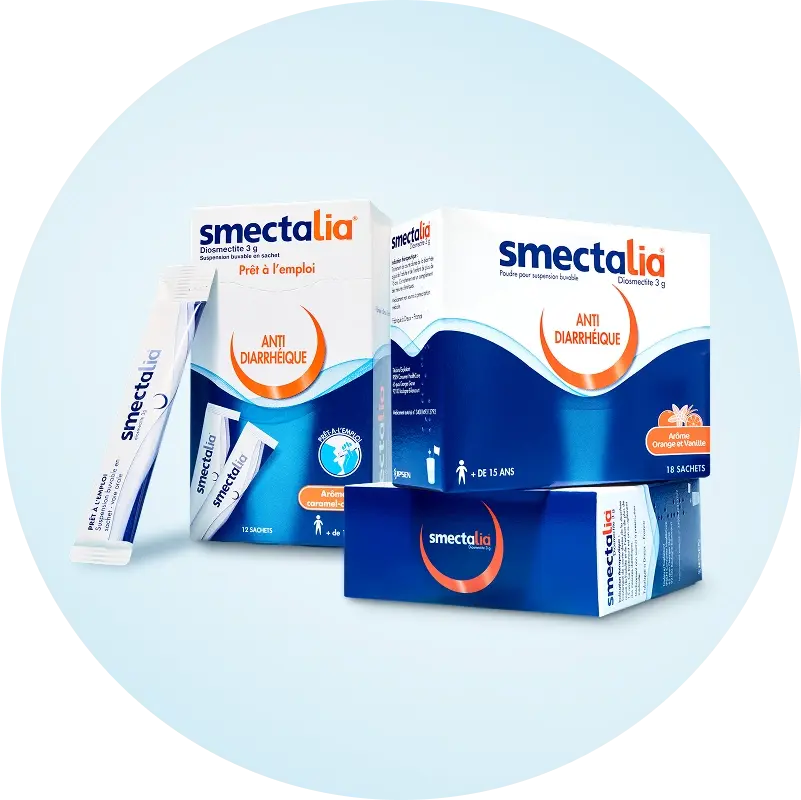
Why Smecta® Is the Right Choice
- Traps or adsorbs the causal agents or infective agents⁹ ¹⁶
- Protects and reinforces the intestinal mucosa with its coating capacity¹⁷
- Clinically validated for most diarrhea types⁵ ¹⁸
- Safe for children and adults⁸
- Recommended by international guidelines in combination with ORS in children⁷
- Easy to use – available in Ready to Use Stick⁸
- Made from natural ingredients – natural therapeutic clay¹⁸
- High Quality standards from extraction, purification and release, preserving the properties of a natural clay⁸ ¹⁸
Smecta doesn’t mask the symptoms – it treats and stops diarrhea fast and supports intestinal recovery with an excellent safety profile⁸ ¹⁸
FAQ
Is diarrhea a real symptom of anxiety?
Yes, the gut-brain axis causes stress to impact digestion and bowel function. ² ³ ¹³ ¹⁴
Can it happen suddenly?
Absolutely. Diarrhea from stress can start within minutes of emotional strain³ ¹³
Should I see a doctor?
If it happens frequently or interferes with daily life, yes—especially to rule out IBS or other gut disorders⁶ ¹⁰ ¹¹.
Is this common before big events?
Yes, it’s one of the most common psychosomatic reactions to public speaking or exams¹³ ¹⁴.
What if stress makes my digestion worse long-term?
Consult a gastroenterologist and possibly a mental health professional. You might benefit from a dual-approach treatment¹⁰ ¹¹ ¹⁴.


Références :
- Almy TP, Tuli M. Alterations of colonic function in humans under stress: experimental production of changes simulating irritable colon. PubMed. 1947.
- Mayer EA, Nance K, Chen S. The gut–brain axis. PubMed. 2022. Available from: https://pubmed.ncbi.nlm.nih.gov/34669431/
- Legg TJ. Can stress cause diarrhea? Healthline Media. 2018. Available from: https://www.healthline.com/health/can-stress-cause-diarrhea
- Cleveland Clinic. Diarrhea overview. Available from: https://my.clevelandclinic.org/health/diseases/4260-diarrhea
- Dupont S, et al. Antidiarrheal effects of diosmectite in the treatment of acute diarrhea in children: a review. Pediatric Drugs. 2009;11(2):89–99.
- Katorkin SE, Bystrov SA, Lisin OE, Bezborodov AI, Shestakov EV, Lisina AA, Arustamyan AV, Lisin DE. Irritable bowel syndrome – a surgeon’s perspective. RMJ. 2019.
- World Gastroenterology Organisation. Global Practical Guidelines: Acute diarrhea in adults and children – a global perspective. 2012.
- Patient information leaflet – Smecta, powder for oral suspension [orange, vanilla-strawberry], 3 g. 18/03/2024. Patient information leaflet – Smecta, oral paste, 3 g. 17/04/2024.
- Brouillard MY, Rato DG. Adsorption capacity of two clays, smectite and kaolin, on bacterial enterotoxins. Gastroenterol Clin Biol. 1989;13:18–24.
- Kozlova IV, Myalina Yu. Saratov Scientific and Medical Journal. 2014;10(1):80–85.
- Plotnikova EY, Seledtsov AM, Shamray MA, Talitskaya EA, Borshch MV, Krasnov OA. Psychosomatic aspects in gastroenterology. Med Practitioner. 2012.
- National Institutes of Health (NIH). Gut–Brain Interaction. Available from: https://www.ncbi.nlm.nih.gov/pmc/articles/PMC4367209/
- Harvard Health. How stress affects digestion. Available from: https://www.health.harvard.edu/newsletter_article/stress-and-the-sensitive-gut
- Mayo Clinic. Stress management. Available from: https://www.mayoclinic.org/tests-procedures/stress-management
- Cleveland Clinic. Stress reduction & relaxation. (applied to digestion context).
- Droy-Lefaix MT, et al. Influence of two antidiarrhoeals on bacterial colonization of intestinal mucosa by Campylobacter jejuni and retention of its integrity. Rev Inst Pasteur Lyon. 1986;19:29–37.
- Serrano JJ. Smectite: Study of the specific surface area, coating capacity and antiulcerative activity. Ipsen Report. 1986.
- Guarino A, et al. Clinical role of diosmectite in the management of diarrhea. Expert Opin Drug Metab Toxicol. 2009;5(4):433–40.
See more
SCA-GO-002499